Throughout his career, Derek Jarman meticulously documented the planning and research for his creative projects in a series of albums and scrapbooks, which he called ‘grimoires’—books of magic and spells, and filled these pages with personal reflections and ideas.
The phrase “a Blueprint for BLISS” is found on the inside cover of a volume from 1989, outlining the initial concepts for his final film, Blue 1993. This work serves as a memoir of Jarman’s formative experiences as a gay man and his confrontation with illness and mortality. Elsewhere in his writing, bliss expresses something radical—something that exists despite oppression and refuses to be diminished by it. He wrote: “Bliss in our mouths, bliss in our hearts, bliss in our bodies.”
Similarly, this symposium provides a framework for considering the transcendent qualities of Jarman’s art, politics, and lived experience, as well as social and artistic histories that challenge societal norms and stigmatisation, and frame queer pleasure as a political act.
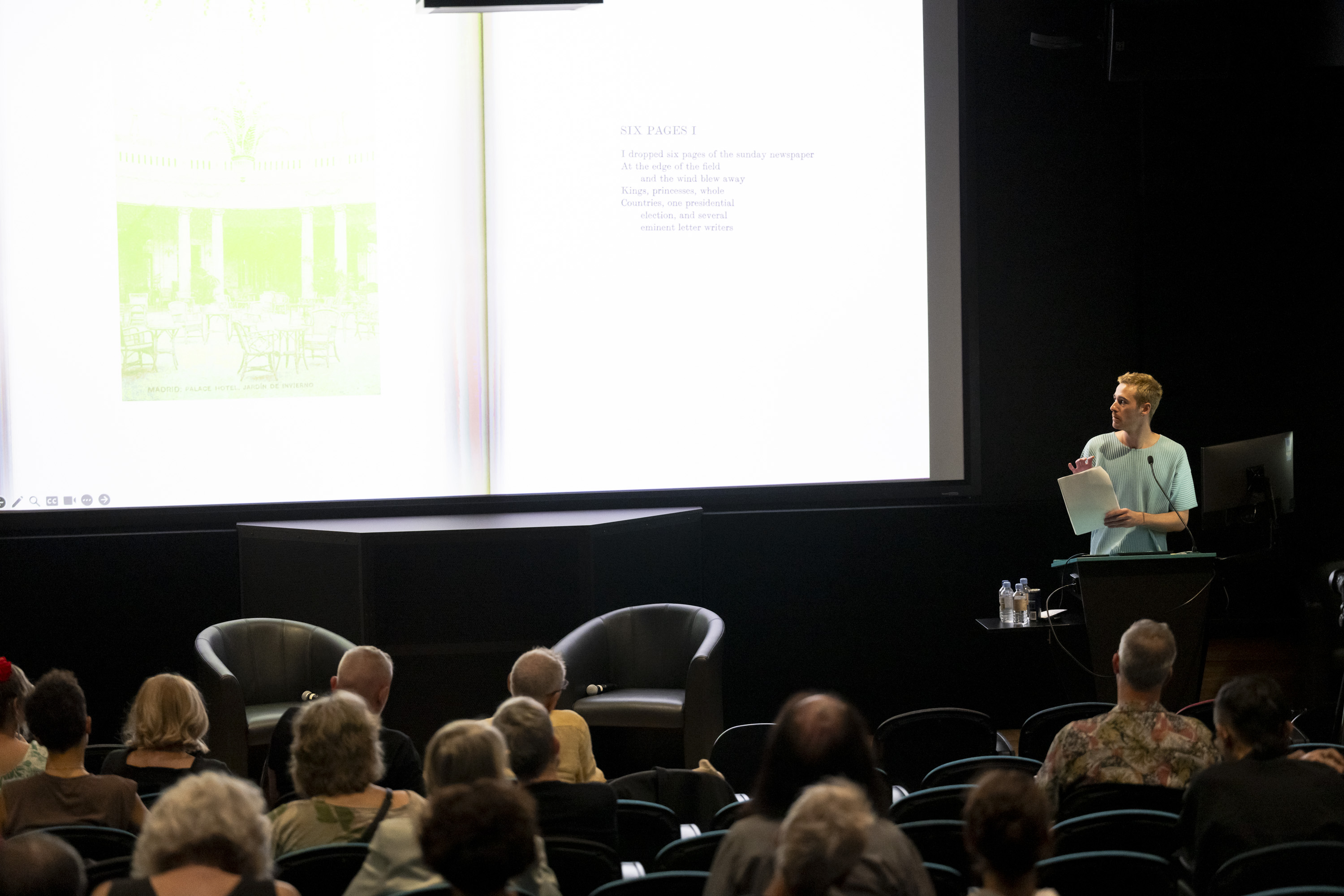
‘A Blueprint for BLISS’, ‘Derek Jarman: Delphinium Days’, UNSW Galleries, 2025.
Photograph: Cassandra Hannagan
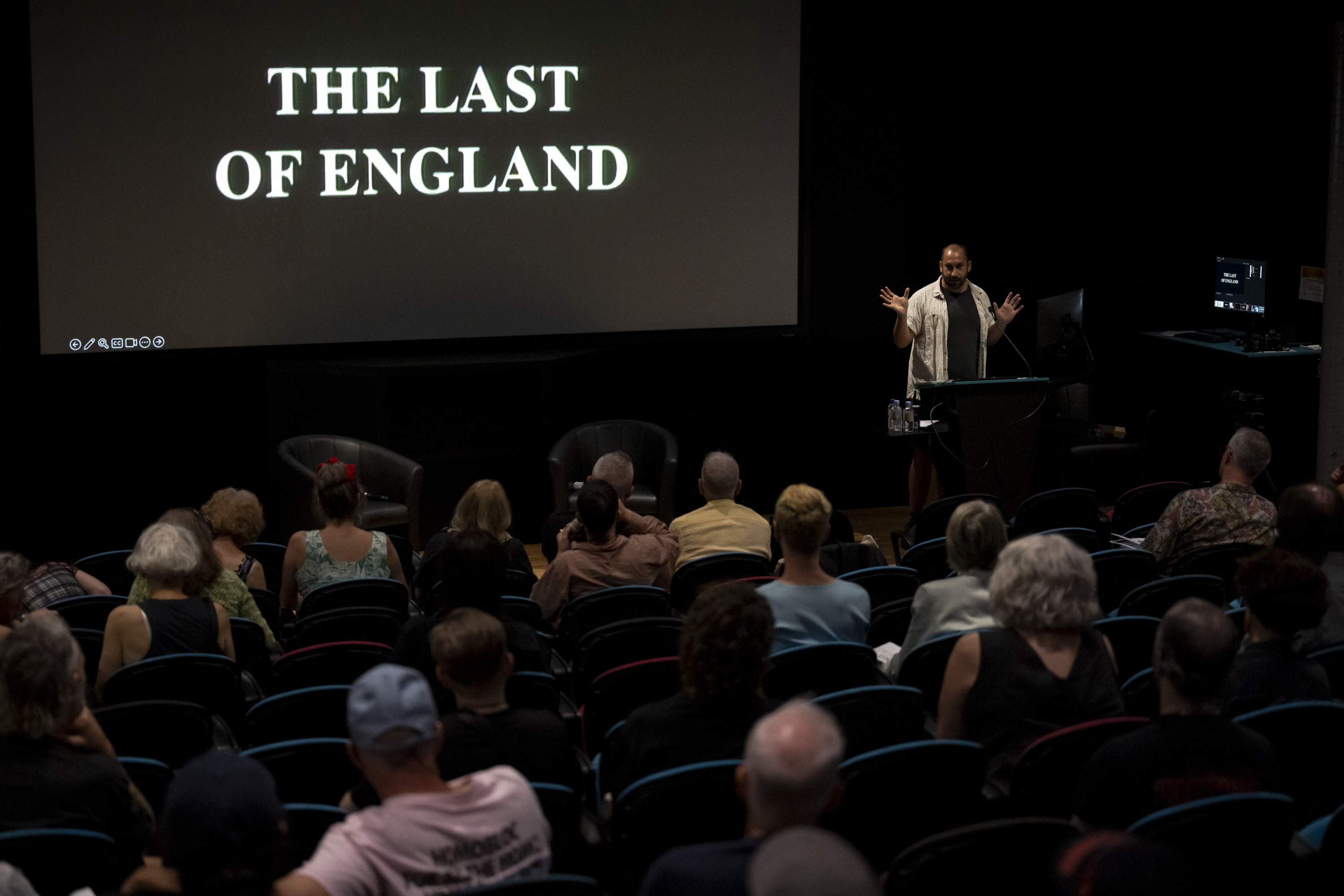
‘A Blueprint for BLISS’, ‘Derek Jarman: Delphinium Days’, UNSW Galleries, 2025.
Photograph: Cassandra Hannagan
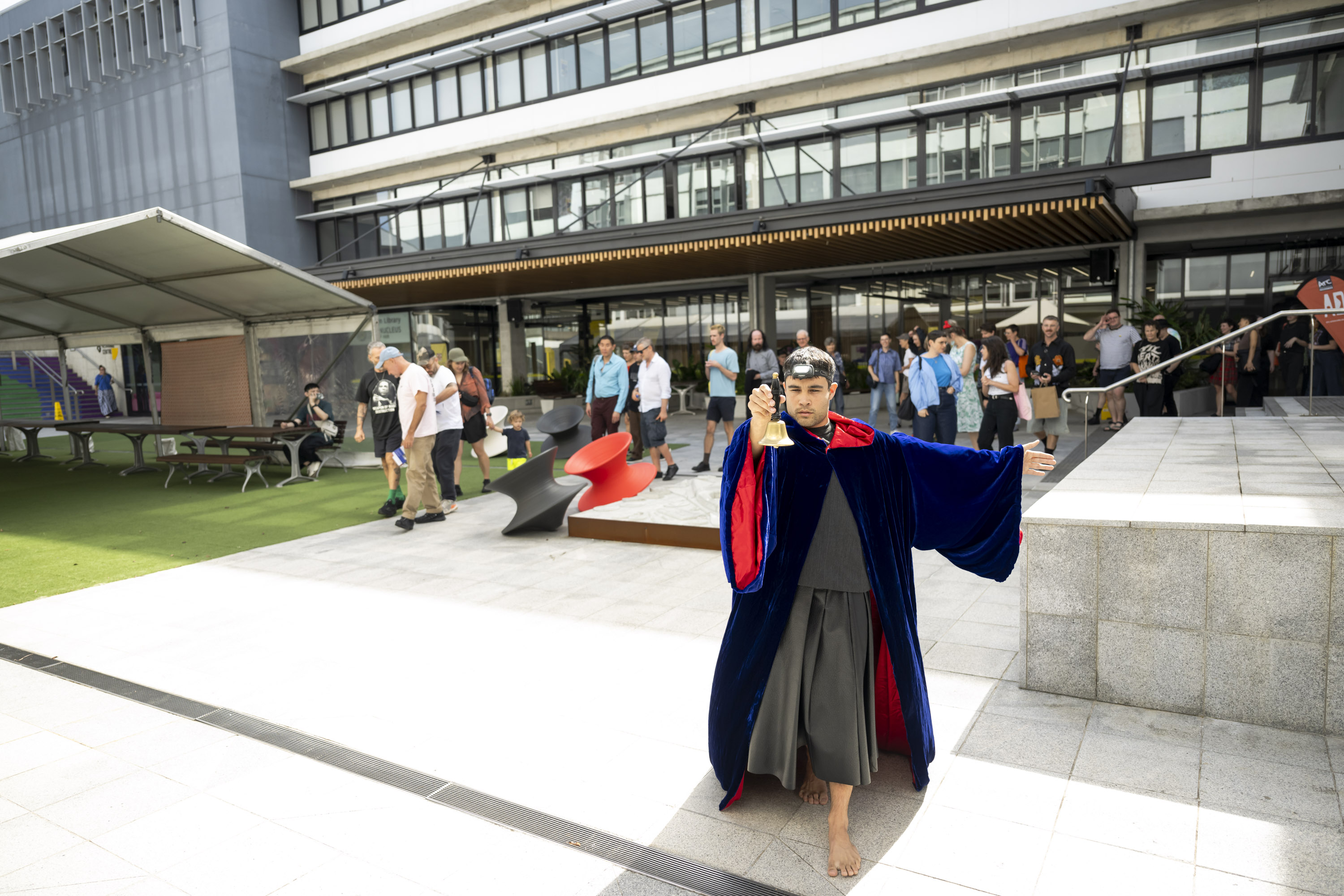
Marcus Whale Performance, Queer Remains, ‘A Blueprint for BLISS’.
‘Derek Jarman: Delphinium Days’, UNSW Galleries, 2025.
Photograph: Cassandra Hannagan

Marcus Whale Performance, Queer Remains, ‘A Blueprint for BLISS’.
‘Derek Jarman: Delphinium Days’, UNSW Galleries, 2025.
Photograph: Cassandra Hannagan
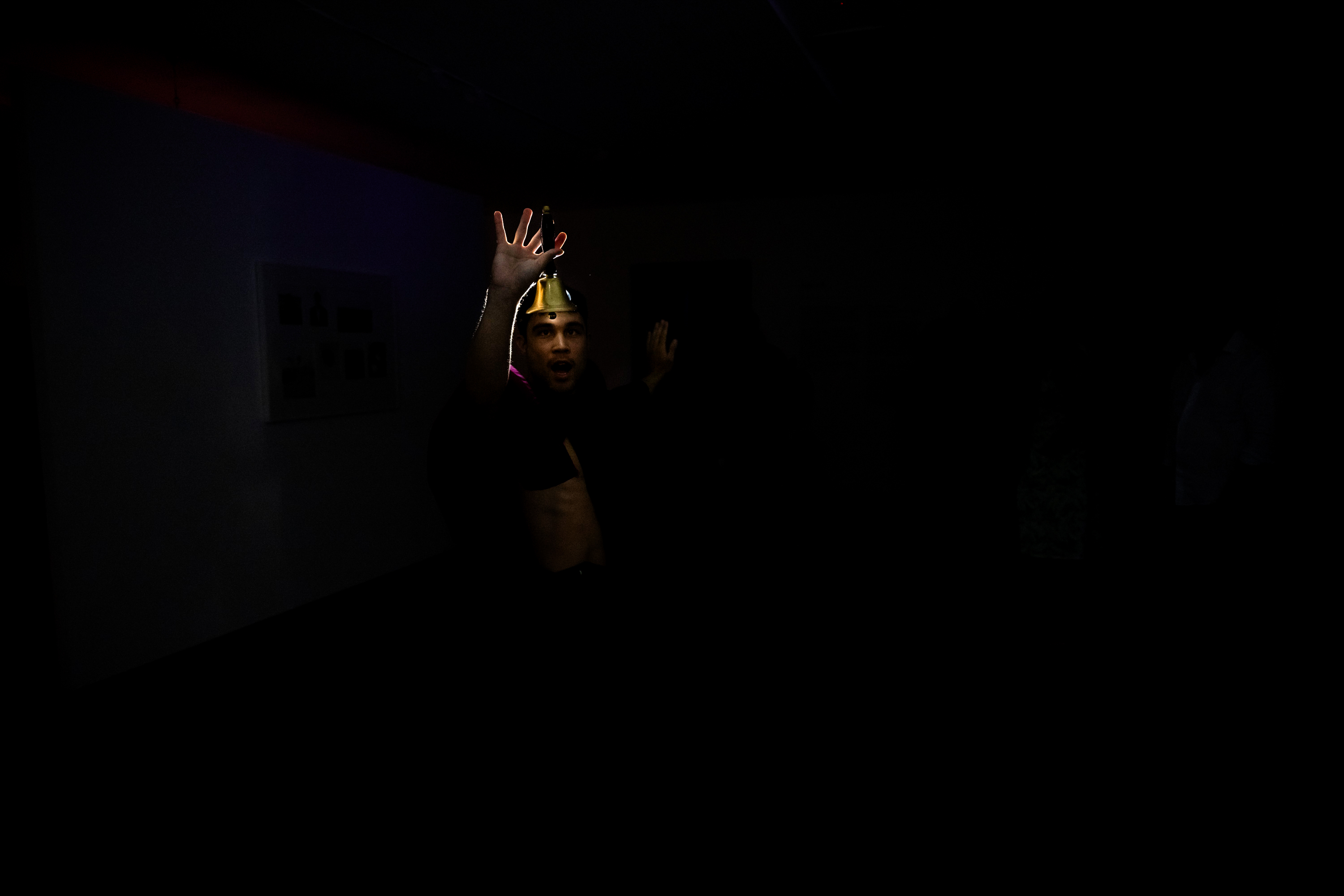
Marcus Whale Performance, Queer Remains, ‘A Blueprint for BLISS’.
‘Derek Jarman: Delphinium Days’, UNSW Galleries, 2025.
Photograph: Cassandra Hannagan
FUCK ME BLIND
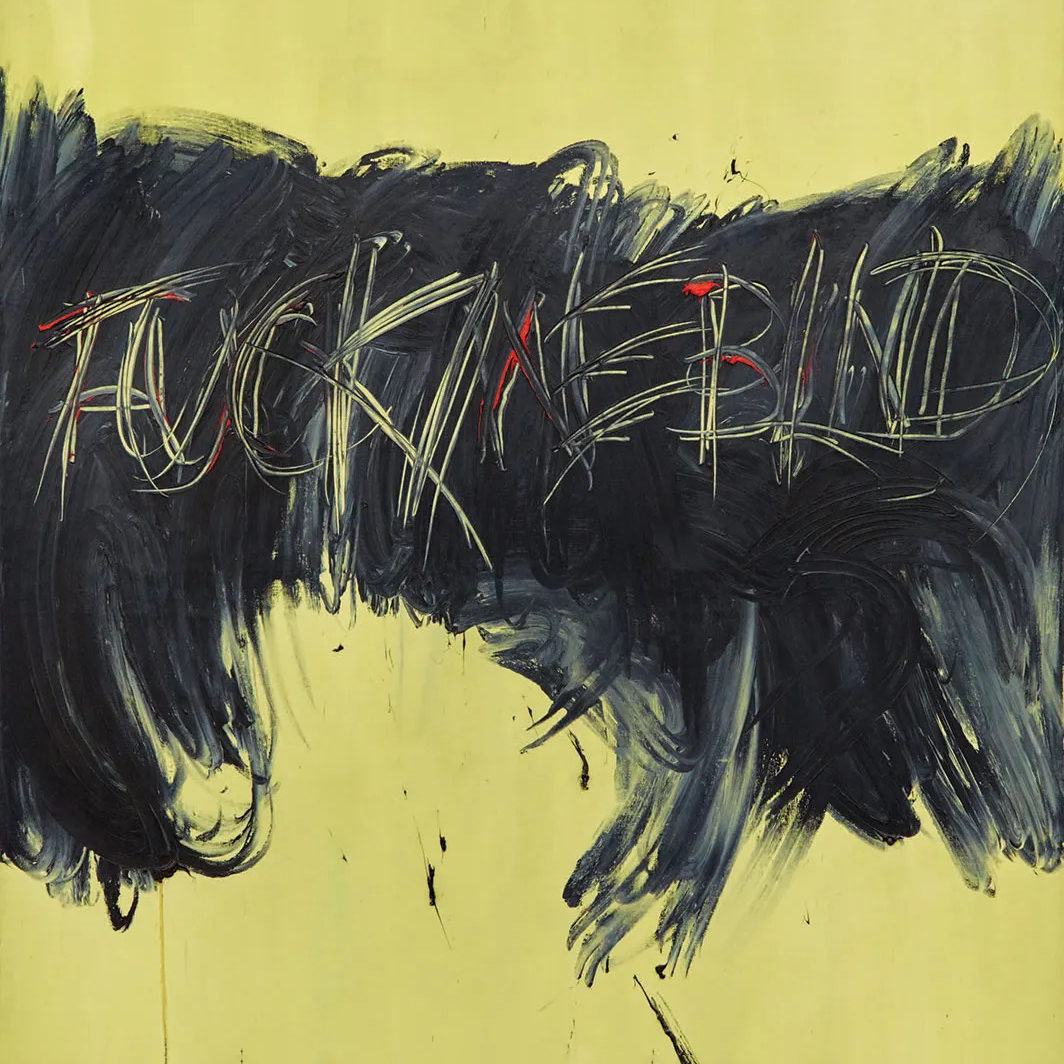
The painting Fuck Me Blind 1993 was one of Derek Jarman’s final works, created for his ‘Evil Queen’ series. The phrase, scratched into the paint-smeared surface of his canvas, spoke of excess, humour, subversion, and joy, despite Jarman’s bodily deterioration and loss of vision.
This session features presentations by artist-researchers Blake Lawrence and Jade Muratore, who draw on histories of activism and exhibition-making in the UK and Australia alongside Jarman’s protest of prejudice and vilification of queer and HIV+ people. Coinciding with the 35th Anniversary of ACT UP Sydney, the session also includes a visual account of the group’s actions between 1990–93 by photographer Jamie Dunbar, who discusses his work with composer and activist Lyle Chan, and journalist and activist Kirsty Machon.
Blake Lawrence
Make Mine Oblivion: rage, ruination and salvation at the end
Above a roaring furnace in the shadows of the nuclear power station of Dungeness, found objects—shattered glass, crushed cans, a bible, pillows, cutlery—are blackened and embalmed in melted pitch, and cast upon mattresses, boards, and canvases. In the wake of Jarman’s HIV diagnosis in 1986, his catalogue took on a burning, urgent, and combative bent. Blake Lawrence considers Jarman’s final insurgent years, and places them in conversation with local artists visualising their own (im-)mortality.
Blake Lawrence is an interdisciplinary artist and researcher living in Warrang/Sydney working with performance, drag, photography, film, textile, and story.
Jade Muratore
Death, desire, devotion: imaging queer sex in the time of AIDS
In the early 1990s, two groundbreaking exhibitions contesting representations of HIV/AIDS were exhibited in the UK and Australia: ‘Ecstatic Antibodies: Resisting the AIDS Mythology’ (1990– 91, UK, curated by Tessa Boffin and Sunil Gupta) and ‘Don’t Leave Me This Way: Art in the Age of AIDS’ (1994, Australia, curated by Ted Gott). In the spirit of Jarman’s own artistic practice of doing desire and deviance against pathology and prejudice, Jade Muratore focuses on photographic works from both exhibitions that centre pleasure and sexual encounters in the face of death and discrimination.
Jade Muratore is a researcher, artist and writer based in Warrang/Sydney. She works across video, performance, and the written word with a specific interest in queer performance, film, and visual culture, alternative historicising practices, and fandom methodologies. She is currently completing her PhD at UNSW Art & Design.
Jamie Dunbar, Lyle Chan, and Kirsty Machon
ACT UP: Footsteps on the dancefloor
ACT UP Sydney was a chapter of the AIDS Coalition to Unleash Power, an international activist organisation that worked to end the AIDS pandemic and gain access to new forms of treatment. Coinciding with the 35th anniversary of the founding of Sydney’s chapter, Jamie Dunbar shares his photographic archive of the group’s actions in discussion with friends, accomplices, and former ACT UP members Lyle Chan and Kirsty Machon.
Lyle Chan is an award-winning classical composer, but during the AIDS epidemic, he was a full-time activist. A core member of ACT UP Sydney, he focused on access to experimental treatments. He ran the Sydney buyers club importing ddC from Los Angeles. He was also a member of the AIDSX collective that intervened in clinical trial design and disseminated cutting-edge information.
Jamie Dunbar has photographed the gay and lesbian scene in Sydney from the late 1980s into the 2000s. His documentation spans protests and advocacy including HIV/AIDS activist organisation ACT UP, as well as eclectic warehouse parties, parades, drag queens, politicians, and celebrities.
Kirsty Machon is a former ACT-UPper and has a 30-year involvement with Australia’s HIV response as a journalist, advocate, policy-writer, and EO. She chaired the Victorian AIDS Council and has published and presented on HIV treatments, stigma, breast-feeding, immigration, and clinical trials.
DIGGING IN ANOTHER TIME
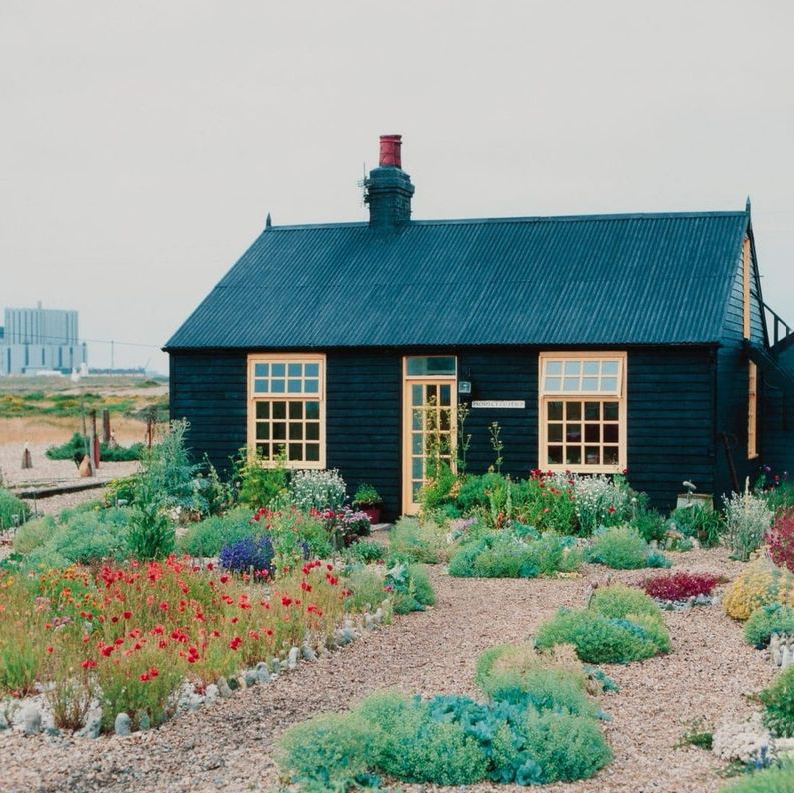
Derek Jarman’s home garden in Dungeness symbolised the artist’s prolific, generous, collaborative practice, which continued despite illness. In his memoir Modern Nature, he writes, “The gardener digs in another time, without past or future, beginning or end.”
This session features presentations by curator Lisa Beauchamp and artist Mel Deerson that revisit the garden as a site of memory, resistance, and ceremony throughout Jarman’s artmaking and experimental films. Accompanying these talks is a conversation with Ken Davis (Sr Mary Third Secret of Fatima) and curator Nick Henderson on the transformative actions of the Sisters of the Order of Perpetual Indulgence in Sydney and London, the latter canonising Jarman at Dungeness in 1991.
Lisa Beauchamp
The garden is an anchor
Jarman’s love for gardens began with a book his parents gifted him as a child entitled Beautiful Flowers and How to Grow Them. From this moment to his time at the Slade School of Art and later years at Prospect Cottage, Jarman’s passion for landscape has been central to his life and art. Lisa Beauchamp explores the presence of landscape in Jarman’s practice with a focus on his paintings and the influence of his move to Dungeness, where he established a garden and wrote extensively on the healing potential of gardening.
Lisa Beauchamp is Director and Curator of Contemporary Art at Gus Fisher Gallery | The University of Auckland / Waipapa Taumata Rau. She joined the gallery in 2018 following a move from the UK. She wrote her first essay on Derek Jarman at aged 15 and is the co-curator of Derek Jarman: Delphinium Days.
Mel Deerson
Dream of the poppy
Throughout his career, Jarman explored the improvisational potential of Super 8 film to create a sense of fragmentary, psychedelic visions or dreams. Mel Deerson explores this spontaneous, visionary energy through the recurring image of the poppy flower in Jarman’s work. The poppy is associated with dreams, sleep, and death in European myth and folklore, and its glowing form appears throughout Jarman’s films, writing and his garden. An opportunist plant that springs unbidden from disturbed and unkempt soils, the poppy can provide a portal to the improvised dream-world of Jarman’s experimental films.
Mel Deerson works prismatically across performance, video, sound, writing, drawing, curating, and teaching. Their recent work reckons with the historical invisibility of queer desire; rather than imagine this as a ‘lack’, they consider this a generative portal for a revelatory, connecting spirit.
Ken Davis and Nick Henderson
The Sisters of Perpetual Indulgence: gay creative political interventions in 1970s and 1980s culture
In 1990, Australian missionary nun Mother Ethel Dreads-a-Flashback (aka Sister Mary Anna-Lingus) introduced a group of activists in London to the Order of Perpetual Indulgence, a global network of queer and trans nuns whose mission is to ‘expiate homosexual guilt from all and to replace it with universal joy’. Later, in 1991, the London Order declared Jarman Saint Derek of the Celluloid Knights of Dungeness in one of their most famous canonisations. Ken Davis speaks with Nick Henderson about his experiences as Sister Mary Third Secret of Fatima, giving special reference to Fabian LoSchiavo (Mother Inferior) who was leading light of the Sydney Order. Together they discuss the cultural and political context of the sexual freedom movement in the 1970s and 1980s and creative responses to the Christian Right.
Ken Davis became involved in gay liberation in Sydney, and was convenor of the Gay Solidarity Group that organised the first three Mardi Gras parades from 1978. He was professed as Sister Mary Third Secret of Fatima by the Order of the Sisters of Perpetual Indulgence Sydney in 1981.
Nick Henderson is an art historian, curator, and archivist at the National Film and Sound Archives. He is also a volunteer committee member, curator, and archivist at the Australian Queer Archives (AQuA). Nick has worked as a curator and archivist across national and state cultural institutions for two decades, including the National Gallery of Australia, National Library of Australia, National Archives of Australia and the Australian Performing Arts Collection at the Arts Centre Melbourne.
QUEER REMAINS
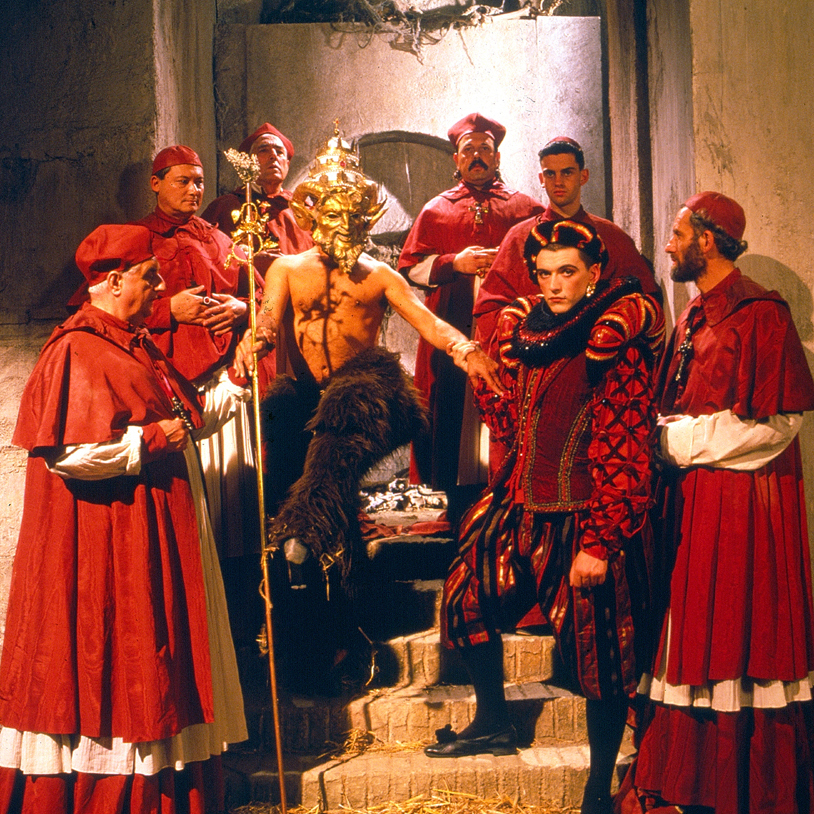
In their article ‘Queer Remains: Derek Jarman’s Archives and Medieval Reliquaries’, M.K Myerson describes how Jarman drew inspiration from medieval reliquaries—containers for holy relics—to develop practices of queer mourning and memorialisation during the AIDS crisis.
This final session features presentations from artist Tarik Ahlip, poet Sholto Buck, and curator José Da Silva. This session explores tangible expressions of reliquaries in Jarman’s archival material, including his recently discovered video experiments, extensive writing, poetry, journals, sketchbooks, and draft scripts for unrealised films to consider their relevance today, and how LGBTQIA+ lives, stories, and bodies are remembered, archived, or unearthed.
José Da Silva
Will You Dance With Me?
Will You Dance with Me? sits adjacent to Jarman’s filmography, having only been rediscovered in 2014 by filmmaker and friend Ron Peck who commissioned the footage in 1984. This work isn’t so much a film or a documentary, but a document that provides insight into Jarman’s first use of video technologies, and the atmosphere of London’s gay community in the early 1980s. José Da Silva considers this work as a preparatory drawing, or home movie that captures the halcyon days of London’s gay scene, right at the onset of the AIDS epidemic that would soon ravage the city’s community, and alter its carefree approach to socialising.
José Da Silva has been the Director of Sydney’s UNSW Galleries since 2018, and is the Chair of University Art Museums Australia. Previously, he led the Australian Cinémathèque, and contributed to an ambitious program of exhibitions, acquisitions, and projects at the Queensland Art Gallery | Gallery of Modern Art for over a decade. In 2024, he curated the 18th Adelaide Biennial of Australian Art at the Art Gallery of South Australia.
Sholto Buck
Puerile Nonsense? On the poetics of Derek Jarman
Published in 1972, A Finger in the Fishes Mouth was Jarman’s first and only poetry collection—a book he later dismissed and attempted to erase, leaving only four original copies. Reprinted as a facsimile in 2014, Sholto Buck offers insight into this rarely seen material, problematising Jarman’s poetic legacy and the ethics of archival excavation. Buck considers poetry a key process within Jarman’s practice, most intensely expressed in his films where text meets image. Buck will read works from the collection alongside two poems commissioned for the ‘Derek Jarman: Delphinium Days’ exhibition.
Sholto Buck is a poet living in Melbourne. He has an MFA in photography/installation from Elam School of Fine Arts, University of Auckland, and a PhD in poetry from RMIT University. His first collection of poetry, In the Printed Version of Heaven, was published by Rabbit in 2023.
Tarik Ahlip
Cold War pastoral
The totality of Jarman’s oeuvre encompasses an active chronicle of his times and a restless search for historical echoes. Drawing on his film work, writing, personal archives, and commercial collaborations, Tarik Ahlip will describe how Jarman’s reclamation of pastoral lyricism and the historical tense amid the tensions of the Cold War and AIDS crisis prefigured the political postures of an incoming generation of artists.
Tarik Ahlip is an artist working between sculpture, film and verse. He has spent the largest part of his time practicing as an artist on Darug land. Recent projects include Solstice (2022), a short film intended partly as an homage to Jarman’s Blue (1993). He is currently a resident at Gertrude Contemporary and is working on a short film about the ecology of the Snowy Mountains area.
Marcus Whale
Performance
Marcus Whale makes music, performance, and writing about the ecstasy and horror of desire, the void and the divine. Here, he presents a special performance in response to Jarman’s film Blue.
Marcus Whale makes music, performance, and writing about the ecstasy and horror of desire, the void and the divine. His shows, often taking place in the round or amongst audiences, range from sets of live music to song-length club moments, from gallery performances to full-length stage shows in the theatre.
Acknowledgments
Program curated by Siân McIntyre. Derek Jarman: Delphinium Days has been co-developed by Gus Fisher Gallery | The University of Auckland, and City Gallery Wellington Te Whare Toi. The exhibition is co-curated by Lisa Beauchamp, Curator of Contemporary Art at Gus Fisher Gallery, Aaron Lister, Senior Curator (Toi) at City Gallery Wellington Te Whare Toi, and Michael Lett.
The exhibition was made possible with the lead support of Tony Kerridge and Micheal Do, with additional support of the City Gallery Wellington Foundation, the Delphinium Days Exhibition Circle, and those who wish to remain anonymous. With thanks to the Keith Collins Will Trust and Amanda Wilkinson, London. Films courtesy of LUMA Foundation and James Mackay.
