Kaye Brown
b. 1954, Milikapiti, Melville Island, Northern Territory.
Tiwi people
Murrakupupuni (Country): Paluwiyanga/Andranangoo (Goose Creek)
Yimunga (Tribe): Takaringuwi (Scaly Mullet); Yoyi (Dance): Tartuwali (Shark)
Kaye Brown is a respected senior Tiwi woman with deep knowledge of traditional stories, culture, and the ‘hard’ Tiwi language. She began painting later in life at Jilamara Arts, using carved ironwood combs (Kayimwagakimi) and local ochres to create richly layered jilamara and pwoja designs inspired by ceremonial body painting. She works on canvas, linen, paper, and stringybark from Milikapiti. Despite starting later, Kaye is now recognised as a leading female artist at Jilamara. Her solo exhibitions (2020, 2022), two-time Telstra NATSIA finalist status, and contributions to the NGV’s TIWI exhibition highlight her growing impact. Her textile designs are also featured in the North Tiwi Strong Women’s Collection.

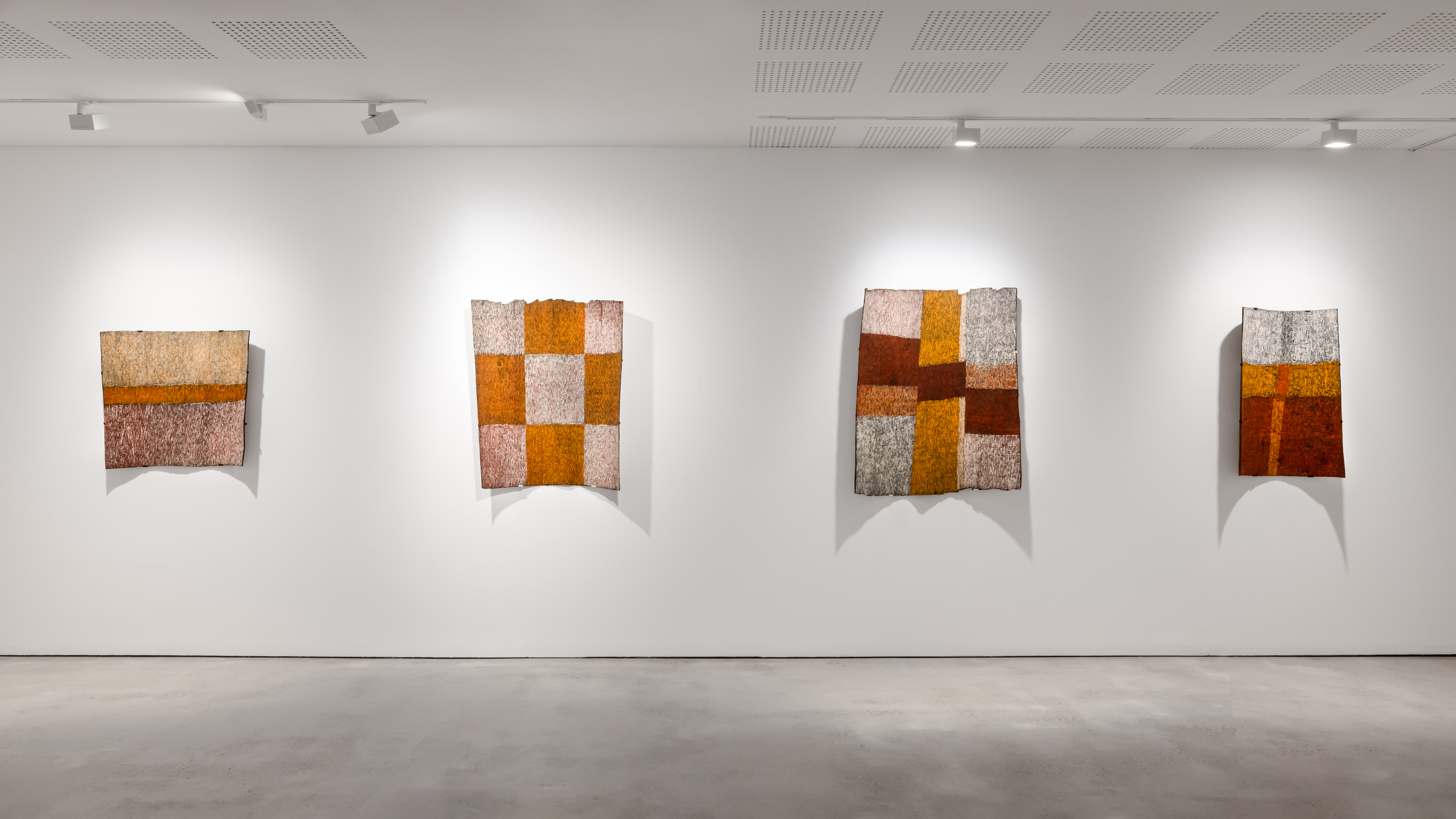
Kaye Brown, Yirrinkiripwoja (body paint design) 2025, Yirrinkiripwoja (body paint design) 2024, Yirrinkiripwoja (body paint design) 2024, and Yirrinkiripwoja (body paint design) 2024.
Installation view, 'Parlingarri Amintiya Ningani Awungarra: Old and New at Jilamara Arts’, UNSW Galleries, 2025.
Photograph: Jacquie Manning
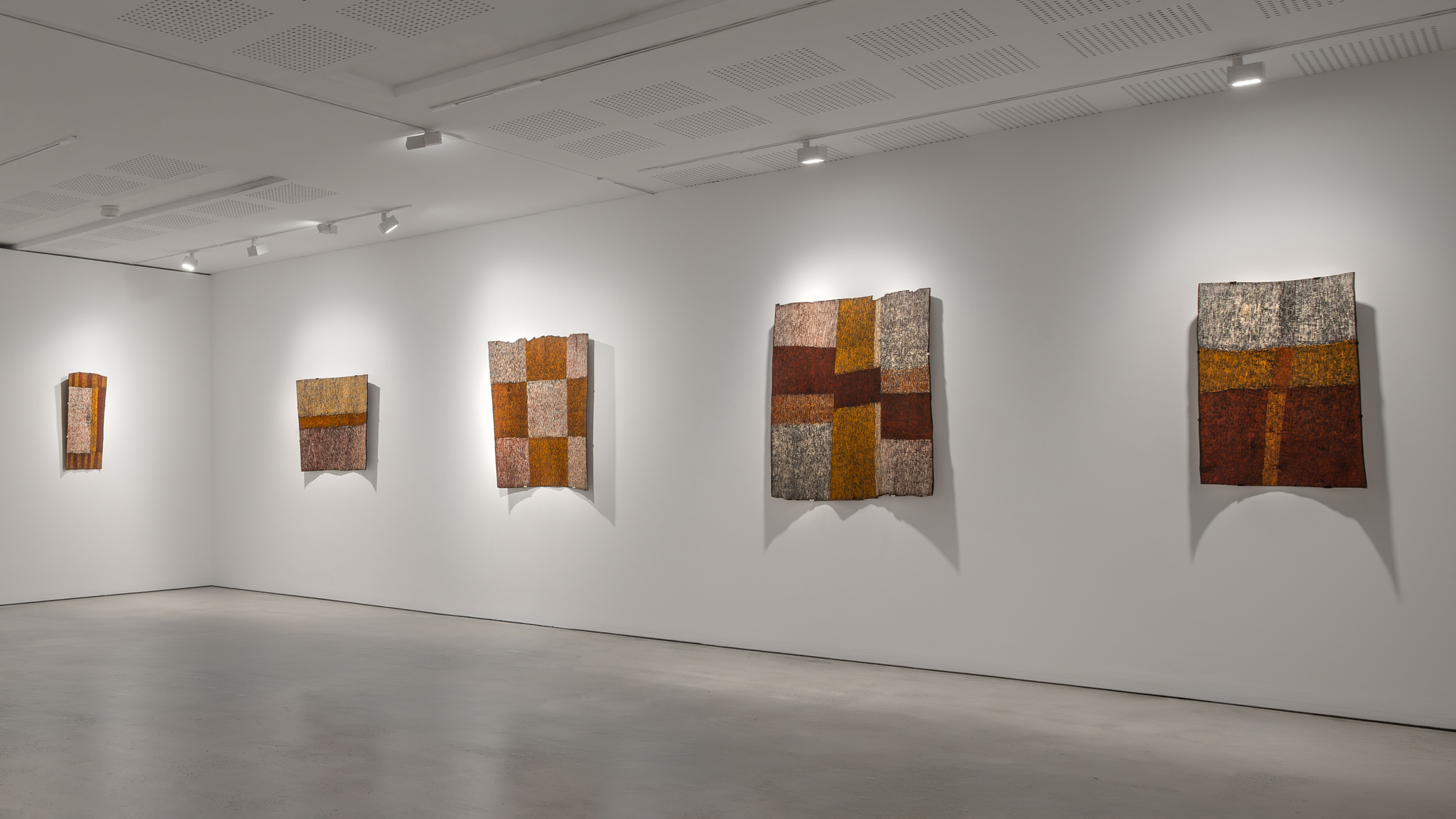
Kaye Brown, Kayimwagakimi jilamara 2025, Yirrinkiripwoja (body paint design) 2025, Yirrinkiripwoja (body paint design) 2024, Yirrinkiripwoja (body paint design) 2024, and Yirrinkiripwoja (body paint design) 2024.
Installation view, 'Parlingarri Amintiya Ningani Awungarra: Old and New at Jilamara Arts’, UNSW Galleries, 2025.
Photograph: Jacquie Manning

Kaye Brown with Patrick Freddy Puruntatameri, Tutini (Pukumani pole) with Tunga (folded bark basket) 2025.
Installation view, 'Parlingarri Amintiya Ningani Awungarra: Old and New at Jilamara Arts’, UNSW Galleries, 2025.
Photograph: Jacquie Manning
Kayimwagakimi jilamara 2025
Yirrinkiripwoja (body paint design) 2025
Yirrinkiripwoja (body paint design) 2024
Yirrinkiripwoja (body paint design) 2024
Yirrinkiripwoja (body paint design) 2024
Locally sourced ochres on stringybark
cat. no. 81–25, 27–25, 407–24, 329–24 and 477–24
Tutini (Pukumani pole) with Tunga (folded bark basket) 2025
Locally sourced ochres on ironwood; folded stringybark, bush string
Made in collaboration with Patrick Freddy Puruntatameri
cat. no. 127–25 and 559–24
Courtesy of the artist and Jilamara Arts & Crafts, Milikapiti
Commissioned by UNSW Galleries with the support of the New Contemporaries Fund for the exhibition ‘Parlingarri Amintiya Ningani Awungarra: Old and New at Jilamara Arts’ at UNSW Galleries.
Kaye Brown also keeps alive the knowledge of ancestral modes of minga (body markings) and contemporary forms of yirrinkiripwoja (body painting), which represents spiritual attachment to ancestral beings. Her tightly clustered dots and layers of ochre are reminiscent of the body-painting styles used to prepare for ceremony and yoyi, made using the pwoja or kayimwagakimi.
The tunga (folded-bark basket) that sit atop tutini (poles) are significant in the of honouring the dead, aiding the spirit’s journey to the afterlife. Following pukumani ceremonies, tunga baskets are placed atop the pukumani pole so the person’s spirit can use and take things with them on their journey.
Kaye says: “Tunga was a basket for hunting. My ancestors … when they caught bush tucker they would put what they caught in the tunga and take it back to their family. We still make tunga and ceremonial objects for pukumani and for artworks as well … When we finish the ceremony the tunga would be put on top of the pukumani pole, so the spirit of the person can use and take things with them on their journey.”