Tina Stefanou’s practice spans experimental film, performance, vocalisation, socially engaged research, and sculptural installation. Attentive to the possibilities of collective voices sounding and sensing across diverse contexts, settings, and species, Stefanou positions performance as an intermedial terrain where speculative worlds can emerge within and beyond institutional spaces. This exhibition brings together two new installations that move between collective vocalisation, acts of re-evaluation, and intergenerational memory. Across both works, Stefanou considers how bodies, objects, and environments become entangled within systems of observation, maintenance, labour, and exchange.
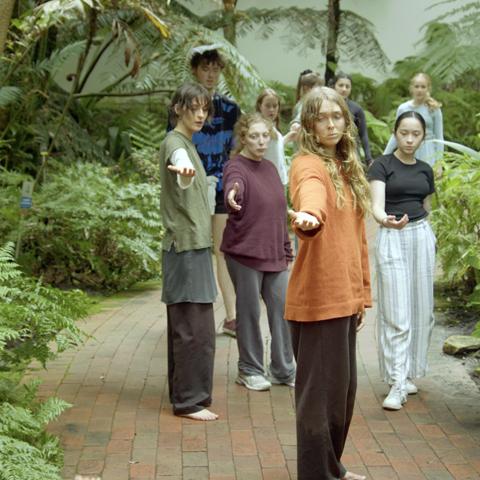
Dance the War of Proximity 2024–26 extends these concerns through a multi-channel video installation documenting a series of live actions made with ten young performers and three movement artists in Adelaide. Together they articulate a metaphorical nervous system: singing, speaking, vocalising, and moving in responsive relation to one another and to their environments. Filmed across sites of collection, conservation, and surveillance, including botanic gardens, summits, and zoological grounds, the work navigates themes of enclosure, voyeurism, valuation, symbiosis, chorusing, and the politics of coming of age. It gestures toward alternate modes of making and sensing that unsettle fixed systems of spectatorship, and momentarily suspend boundaries between performer and environment, self and other, human and more-than-human, labour and leisure.
Panis Populi (bread of the people) 2026 emerges from the damaged remnants of a Ford automobile that once belonged to the artist’s grandmother. Stefanou transforms the abandoned vehicle into a sculptural sound installation shaped by familial storying, industrial history, and material repair. Shifting between wreck, instrument, relic, and sculptural form, it becomes a site where memory presses against broader questions of mobility, automation, and technological transition. Bread appears throughout the installation as both sacred offering and economic index, linking familial ritual with histories of production, austerity, and social unrest. Across the exhibition, a generational drift emerges between collective youth performance and the suspended aftermath of ‘the crash’. Within this tension, collapse and maintenance, inheritance and obsolescence, ritual and riot are held in uneasy relation.

Tina Stefanou, Dance the War of Proximity 2024–26.
Installation view, ‘Tina Stefanou: Dance the War of Proximity’, UNSW Galleries, 2026.
Photography: Jacquie Manning

Tina Stefanou, Dance the War of Proximity 2024–26.
Installation view, ‘Tina Stefanou: Dance the War of Proximity’, UNSW Galleries, 2026.
Photography: Jacquie Manning

Tina Stefanou, Panis Populi (bread of the people) 2026
Installation view, ‘Tina Stefanou: Dance the War of Proximity’, UNSW Galleries, 2026.
Photography: Jacquie Manning
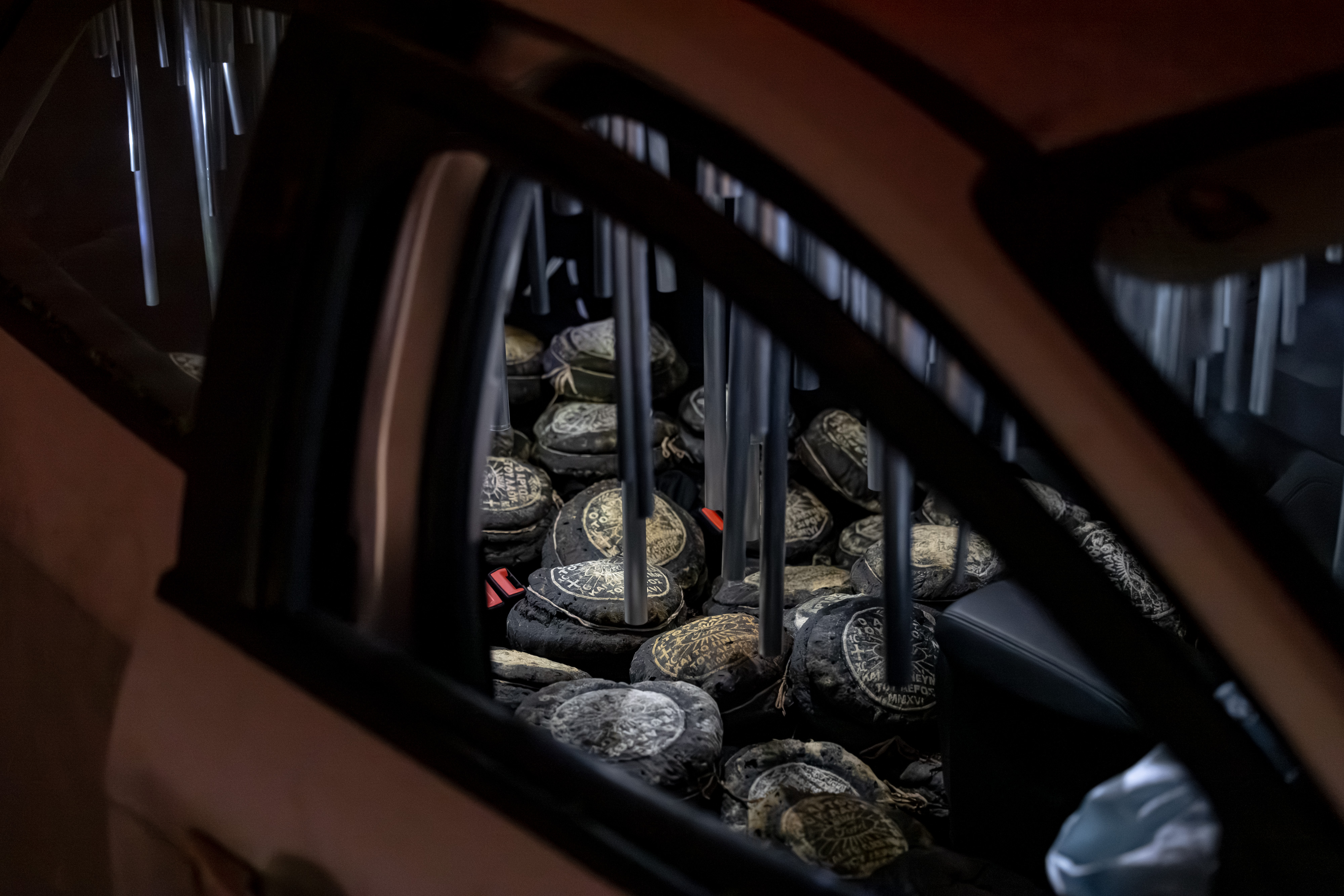
Tina Stefanou, Panis Populi (bread of the people) 2026
Installation view, ‘Tina Stefanou: Dance the War of Proximity’, UNSW Galleries, 2026.
Photography: Jacquie Manning

Tina Stefanou, Panis Populi (bread of the people) 2026
Installation view, ‘Tina Stefanou: Dance the War of Proximity’, UNSW Galleries, 2026.
Photography: Jacquie Manning
Public Programs

Acknowledgement
'Dance the War of Proximity' was first presented as a series of live performances for the '18th Adelaide Biennial of Australian Art: Inner Sanctum', with the support of UNSW Galleries and the Art Gallery of South Australia.
Image: Tina Stefanou, Dance the War of Proximity 2024. Documentation from live performance, filmic event. Courtesy the artist, Naarm/Melbourne. Photo: Wil Normyle and Andrew Kaineder